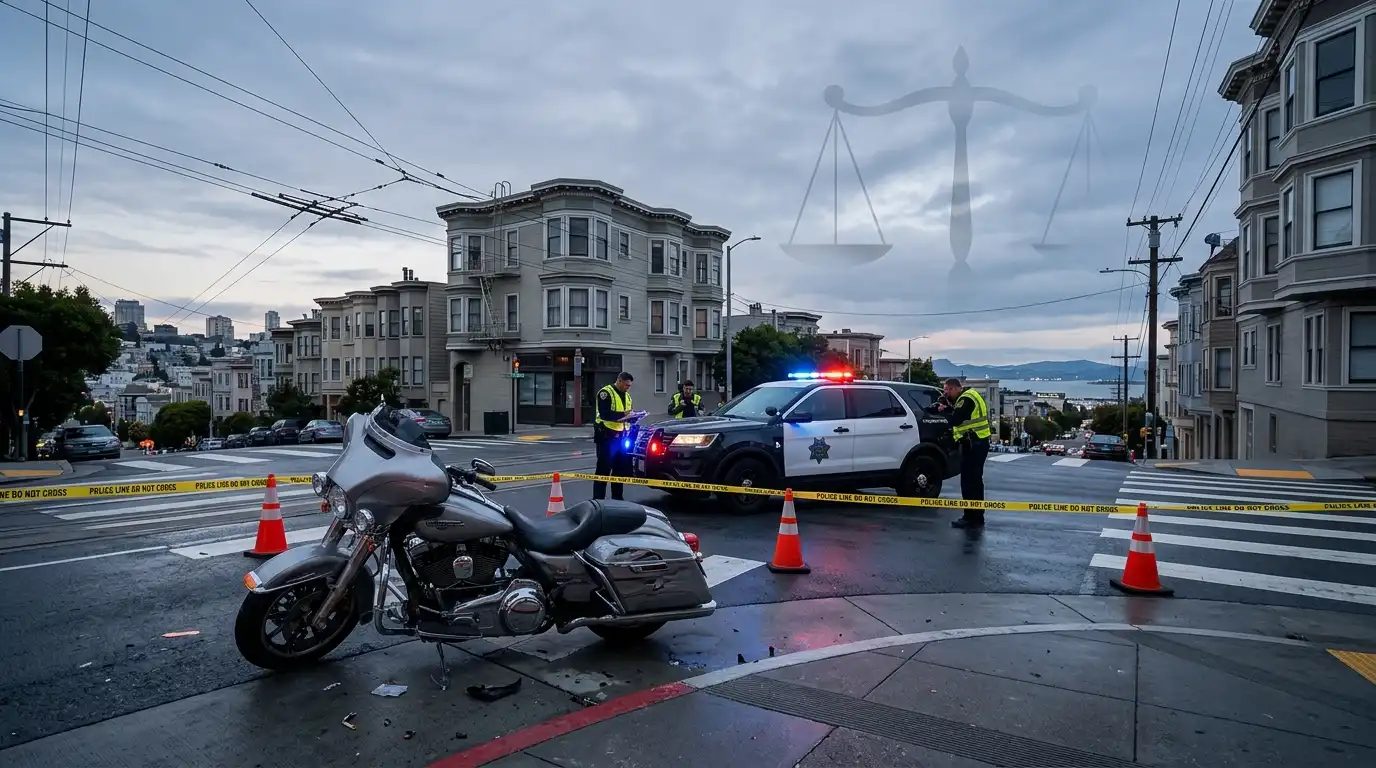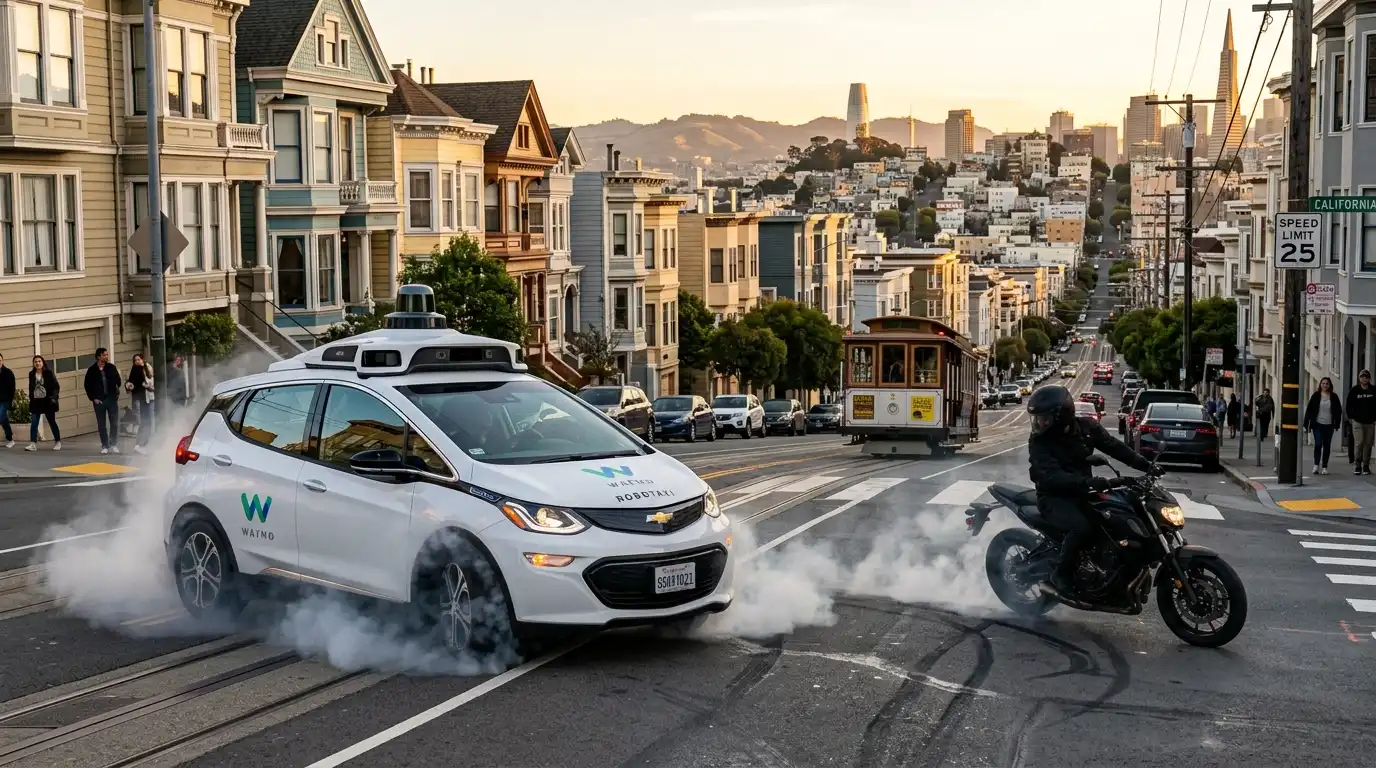
Losing a loved one in a motorcycle accident is an unimaginable tragedy that shatters the foundation of a family. In the dense, high-traffic corridors of San Francisco—from the steep grades of Nob Hill to the fast-moving lanes of the James Lick Skyway—motorcyclists are 28 times more likely to suffer fatal injuries than those in passenger vehicles. When these tragedies occur due to another driver’s negligence, California law provides a pathway for justice. However, as of January 1, 2026, that pathway has fundamentally changed.
The expiration of temporary legislative measures has significantly altered how fatal accident claims are valued in the Golden State. For families seeking accountability, understanding the distinction between a Wrongful Death claim and a Survival Action is now more critical than ever. This guide explores the 2026 legal landscape and how to protect your family’s future after a fatal San Francisco motorcycle accident.
The 2026 Legal Shift: The Sunset of SB 447
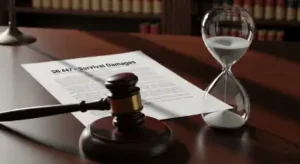
For a brief window between 2022 and the end of 2025, California experiment with a more expansive view of “survival” damages. Under a law known as SB 447, the estate of a deceased person could recover damages for the decedent’s “pre-death pain, suffering, or disfigurement.” This meant that if a rider survived for even a few hours or days after a crash, the insurance company had to pay for that suffering.
As of January 1, 2026, SB 447 has officially sunsetted.
For any case filed on or after New Year’s Day 2026, California has reverted to its traditional rule. Under the current California Motorcycle Wrongful Death 2026 standards, pre-death non-economic damages are no longer recoverable in a survival action. This legislative “rollback” means that insurance companies are already looking to reduce settlement offers in fatality cases. To combat this, your legal strategy must pivot toward maximizing the “Wrongful Death” portion of the claim, which remains unaffected by this sunset.
Wrongful Death vs. Survival Actions: Defining the Two Paths
In the aftermath of a fatal motorcycle crash, survivors often believe they are filing a single “lawsuit.” In reality, we often file two distinct legal actions simultaneously. Understanding the difference is vital for setting expectations regarding compensation.
1. The Wrongful Death Claim (CCP § 377.60)
A wrongful death claim is brought by the heirs (usually a spouse, children, or parents). This claim is not about what the rider suffered; it is about what you have lost. Under California law, you can seek “value” for the loss of the deceased’s:
- Financial support they would have contributed to the family.
- Loss of household services (childcare, maintenance, etc.).
- Loss of “consortium”—the love, companionship, comfort, and guidance of the deceased.
- Funeral and burial expenses.
2. The Survival Action (CCP § 377.30)
A survival action is brought by the estate. It “survives” the victim and seeks to recover what the victim could have sued for had they lived. In 2026, this is now limited to economic losses, such as:
- Medical bills incurred between the accident and the time of death.
- Lost wages between the accident and death.
- Property damage (the value of the motorcycle and gear).
- Punitive Damages: In cases of extreme malice or DUI, the estate can still seek punitive damages to punish the defendant.
The Impact of San Francisco’s Infrastructure on Fatality Claims
San Francisco presents unique challenges for motorcycle safety. Despite the city’s Street Safety Initiative and Vision Zero goals, the 2025-2026 data shows that motorcyclists remain disproportionately at risk in urban intersections. High-injury networks like Market Street or the intersections near the Central Freeway are hotspots for “left-turn” accidents—where a distracted driver turns directly into the path of an oncoming rider.
When investigating a California motorcycle wrongful death 2026 claim in SF, we look at factors unique to our city:
- Municipal Liability: Did a poorly timed traffic signal or a dangerous road defect (like a trolley track or pothole) contribute to the crash?
- Ride-Share Data: With Uber and Lyft headquartered here, many fatal crashes involve distracted ride-share drivers. We subpoena GPS and “app-active” data to prove the driver was distracted by their phone.
- Dashcam and Ring Footage: San Francisco is one of the most surveilled cities in the world. We aggressively canvas for private and public footage to prove the rider was not at fault.
Combating “Biker Bias” in Fatality Investigations
Perhaps the biggest hurdle in any motorcycle accident litigation is the inherent bias against riders. Insurance adjusters and even some police officers often start with the assumption that the motorcyclist was speeding or “splitting lanes” dangerously. In a wrongful death case, where the rider cannot testify to defend their actions, this bias can be deadly to a claim.
In 2026, we utilize Accident Reconstruction AI and forensic experts to tell the rider’s story. By analyzing skid marks, GoPro footage, and bike telematics, we can prove that a rider was adhering to California’s safe lane-splitting guidelines or that they were traveling at a prudent speed despite the driver’s claims. Overcoming this bias is the only way to secure a “Nuclear Verdict” or a maximum settlement for a grieving family.
Strategic Steps for Grieving Families in 2026
 If you have lost a loved one, the legal process is likely the last thing on your mind. However, because the 2026 law has narrowed the scope of “Survival” damages, the timing and quality of the initial investigation are more important than ever. Here is how to protect your rights:
- Secure the Bike: Do not let the motorcycle be scrapped. The bike itself contains evidence (mechanical data, impact points) that proves how the accident happened.
- Appoint a Personal Representative: To file a survival action, the estate needs a representative. We can help you navigate the probate requirements to get this done quickly.
- Avoid Social Media: Insurance companies now use sophisticated AI tools to monitor the social media accounts of heirs. They look for any sign that you aren’t “grieving enough” to devalue the “loss of consortium” portion of your claim.
- Consult a Specialized Attorney: A general “car accident lawyer” may not be aware of the specific 2026 sunset of SB 447 or the nuances of lane-splitting liability.
Why Our San Francisco Firm is Different
We don’t just “process” cases; we represent people. We understand that in San Francisco, riding is more than just transportation—it’s a culture and a community. When a rider is taken from us, the loss ripples through the entire Bay Area.
Our approach in 2026 is built on Total Accountability. We investigate every possible source of recovery, from the driver’s primary insurance to corporate “umbrella” policies and even municipal liability. While the law has limited some damages this year, our resolve to fight for the maximum possible recovery for heirs remains unshakable.
Contact a San Francisco Motorcycle Wrongful Death Expert
The 2026 legal landscape is complex, but you don’t have to navigate it alone. If you are facing the aftermath of a fatal motorcycle accident, we offer a free, confidential consultation to explain your rights under the new statutes. Let us handle the insurance companies and the legal filings so you can focus on your family and your loved one’s legacy.