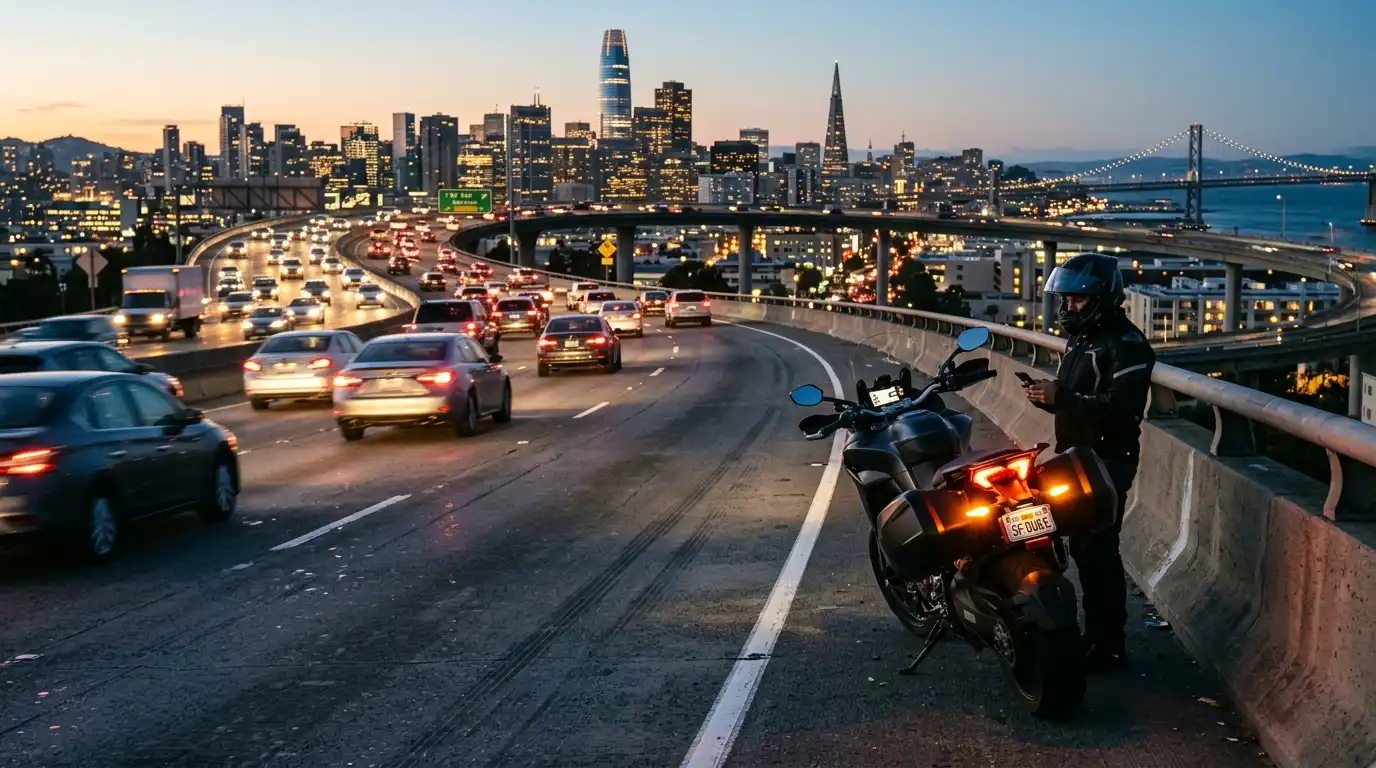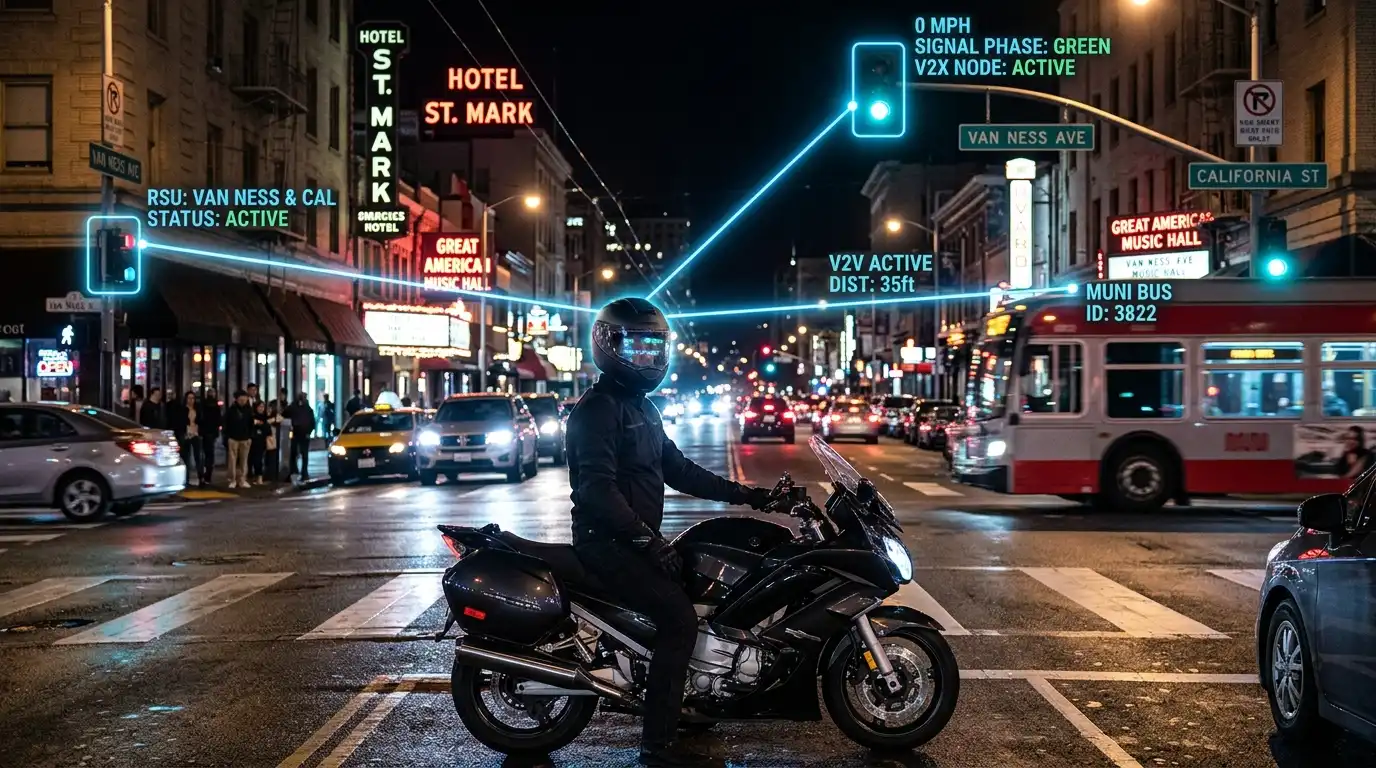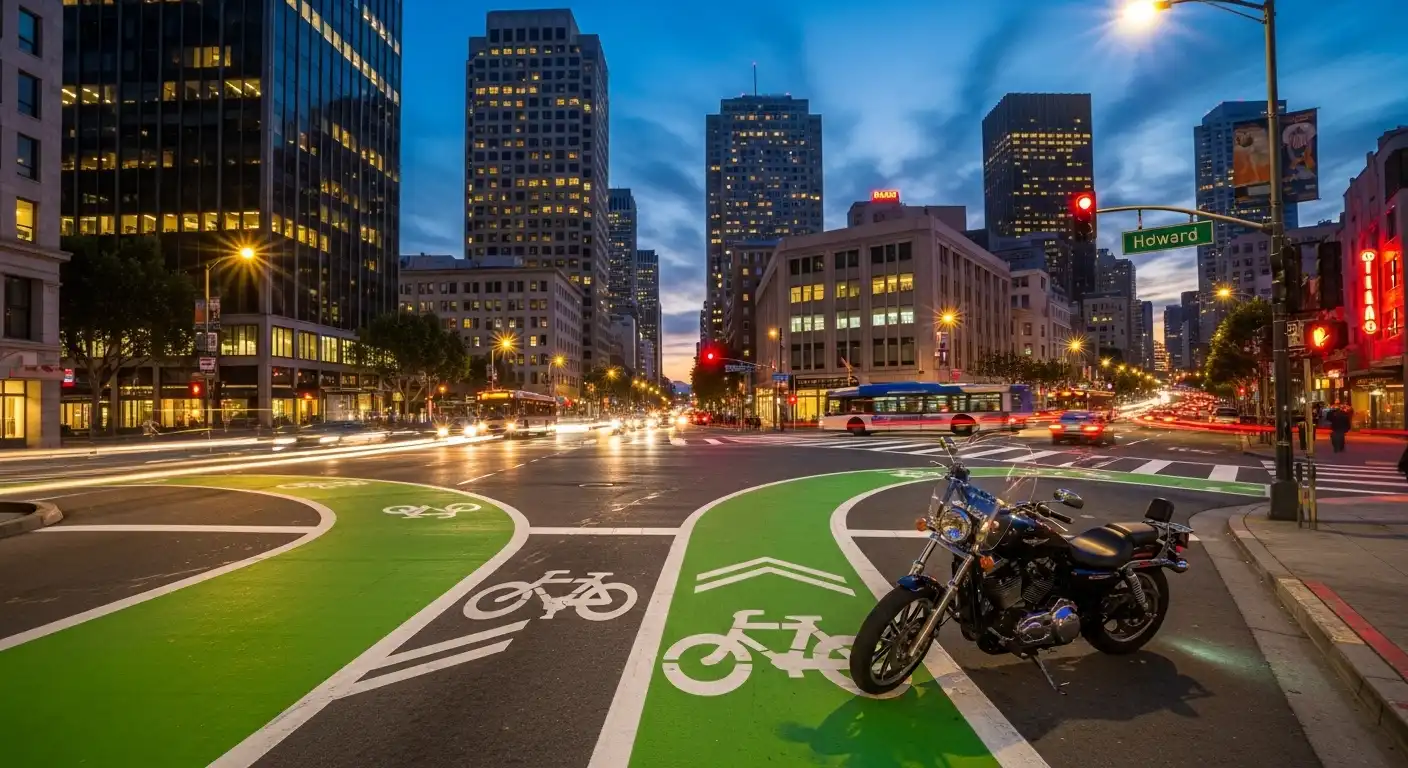
As we move through the second quarter of 2026, San Francisco’s ambitious “Vision Zero” goal—to eliminate traffic fatalities—is facing a critical test. Despite the city’s efforts to redesign streets, recent April 2026 traffic fatality notifications reveal that a staggering 75% of severe motorcycle accidents are still concentrated on just 12% of the city’s streets, known as High-Injury Corridors.
For riders in the South of Market (SoMa) and Bayshore areas, the risk is at an all-time high. If you were involved in a crash at a known dangerous intersection like 7th and Howard, your case isn’t just a simple “driver vs. rider” dispute. The city’s own data may prove that they had prior knowledge of a dangerous condition, potentially opening the door for government liability claims.
The 2026 Hot Spots: Where SF Riders Are Most at Risk
 According to the latest 2026 SFMTA work plan, several key areas have been flagged for immediate “Quick-Build” safety interventions due to a surge in collisions involving stand-up devices and motorcycles:
- 7th and Howard Streets: A notorious SoMa intersection that has seen multiple life-threatening injuries in the spring of 2026.
- Bayshore Blvd and Arleta Ave: Known for high-speed traffic and complex crosswalk interactions that frequently lead to “left-turn” motorcycle accidents.
- Cesar Chavez St and South Van Ness Ave: A high-volume corridor where speeding and red-light violations have reached record highs this year.
How High-Injury Corridors Impact Your Legal Claim
In a standard motorcycle accident lawsuit, the focus is usually on the negligence of the other driver. However, when an accident occurs on a designated High-Injury Corridor, a skilled San Francisco motorcycle accident lawyer looks deeper.
If the city has officially designated a street as “high injury” but has failed to implement promised safety measures—such as mast-arm signals, daylighting, or protected turn lanes—the City and County of San Francisco may be held liable for “dangerous condition of public property” under California Government Code 835.
Key Evidence We Look For in 2026 SF Claims:
- SFMTA Safety Audits: Did the city perform a study on that specific intersection before your crash?
- Vision Zero Progress Reports: Was a safety project for that street “delayed” or “defunded” in the 2026 budget?
- Prior Incident History: How many other riders were injured at that exact spot in the 24 months preceding your accident?
The “Left-Turn” Trap and Quick-Build Infrastructure
 One of the most common causes of crashes on corridors like Bayshore is the “Left-Turn Trap.” In 2026, the city is installing “advanced limit lines” and “hardened centerlines” to force drivers to take wider, slower turns. If your accident involved a driver cutting a corner or failing to see you because of poor “daylighting” (the removal of parking near corners to increase visibility), the city’s failure to maintain these 2026 standards is a critical piece of evidence.
Understanding these infrastructure nuances is vital when lane splitting in San Francisco, as many drivers on these corridors are frustrated by traffic and make sudden, aggressive maneuvers.
What to Do After an Accident on an SF High-Injury Corridor
If you are down on the pavement in SoMa or the Mission, the steps you take in the first 24 hours are vital for a 2026 claim:
- Capture the Scene: Take photos of the intersection’s layout, specifically noting missing signage, faded lane markings, or blocked sightlines.
- Identify the Project Status: Check the SFMTA website or consult with us to see if that street was scheduled for a 2026 safety upgrade.
- File a Government Claim: Claims against the city have much shorter deadlines (usually 6 months) than standard personal injury claims. See our guide on documenting SF motorcycle crashes.
Conclusion: Holding the City and Negligent Drivers Accountable
The streets of San Francisco are iconic, but in 2026, they are proving to be deadlier than ever for those on two wheels. You shouldn’t have to pay for the city’s slow progress on safety or a driver’s distraction. At San Francisco Motorcycle Accident Lawyer, we specialize in the unique traffic laws and infrastructure challenges of the 7×7.