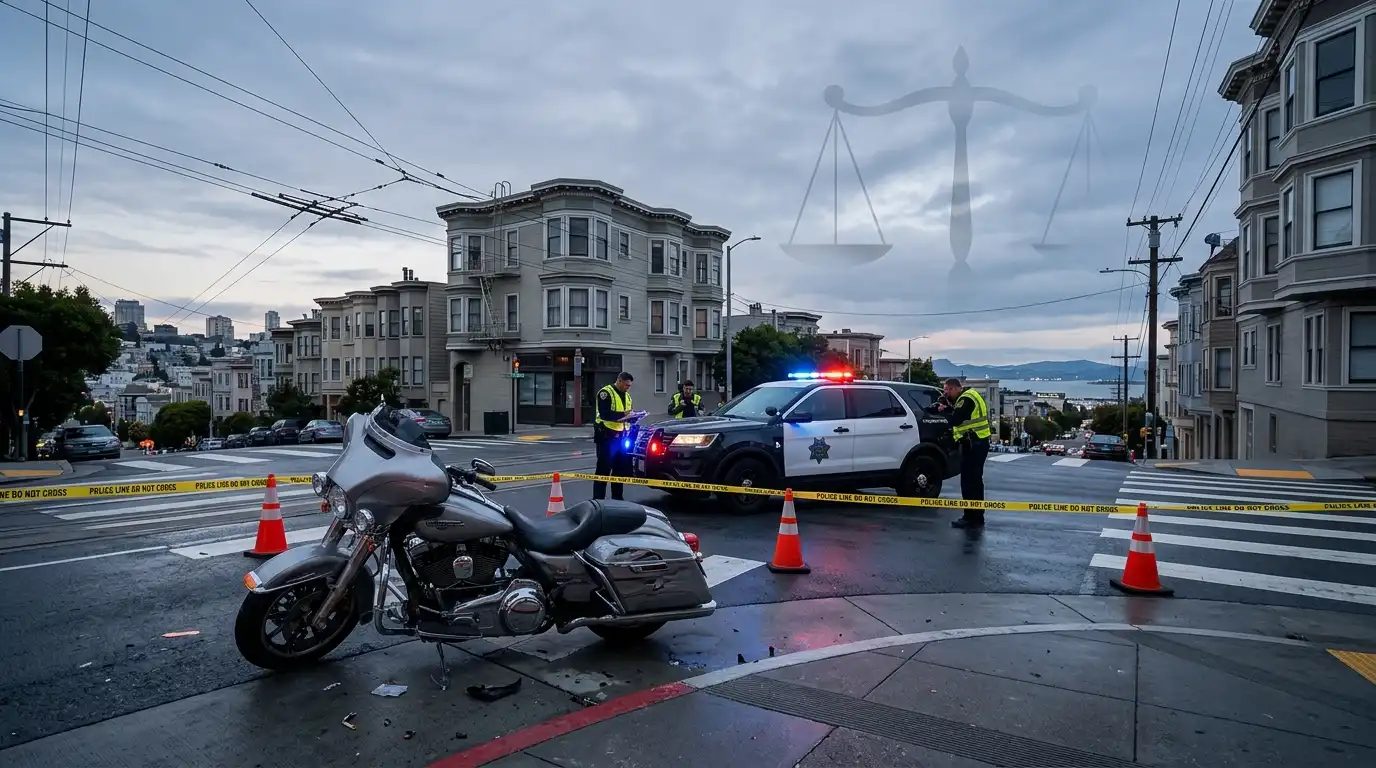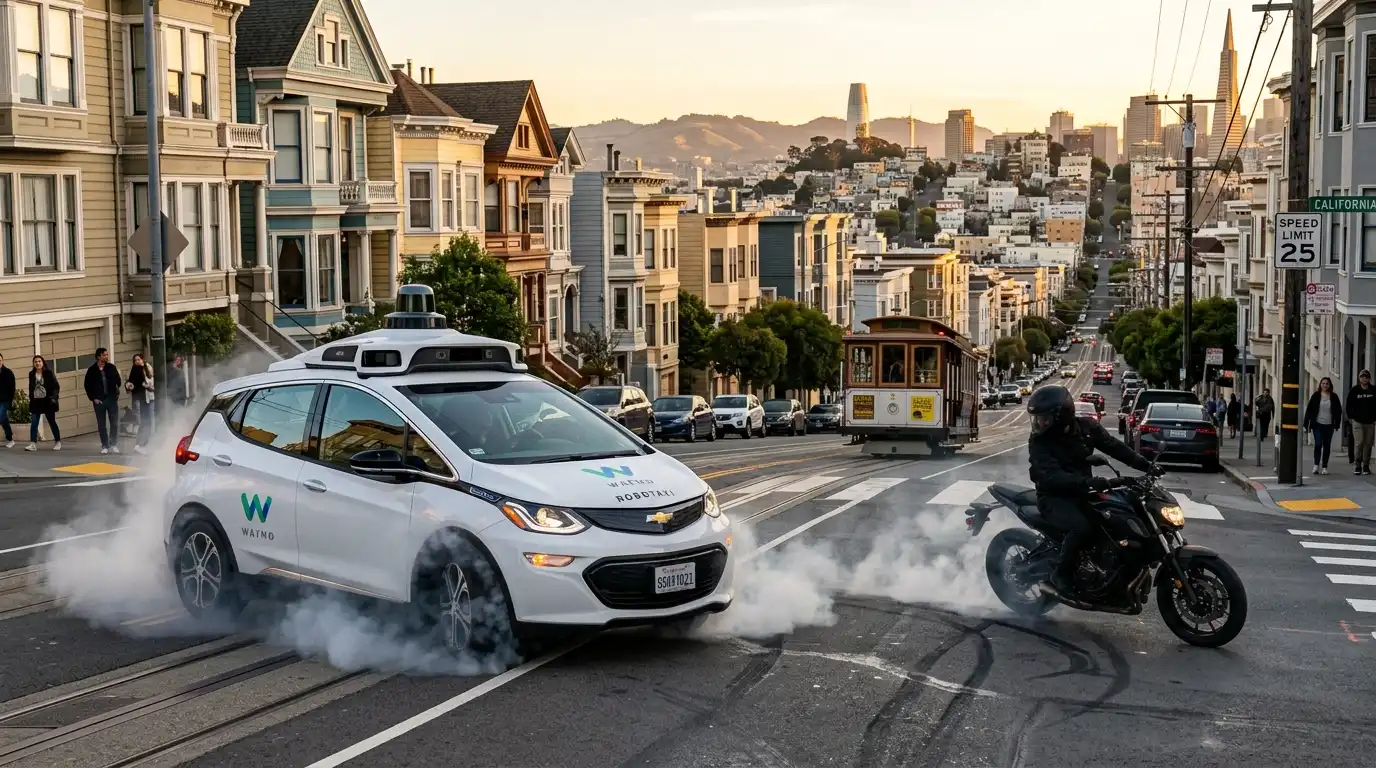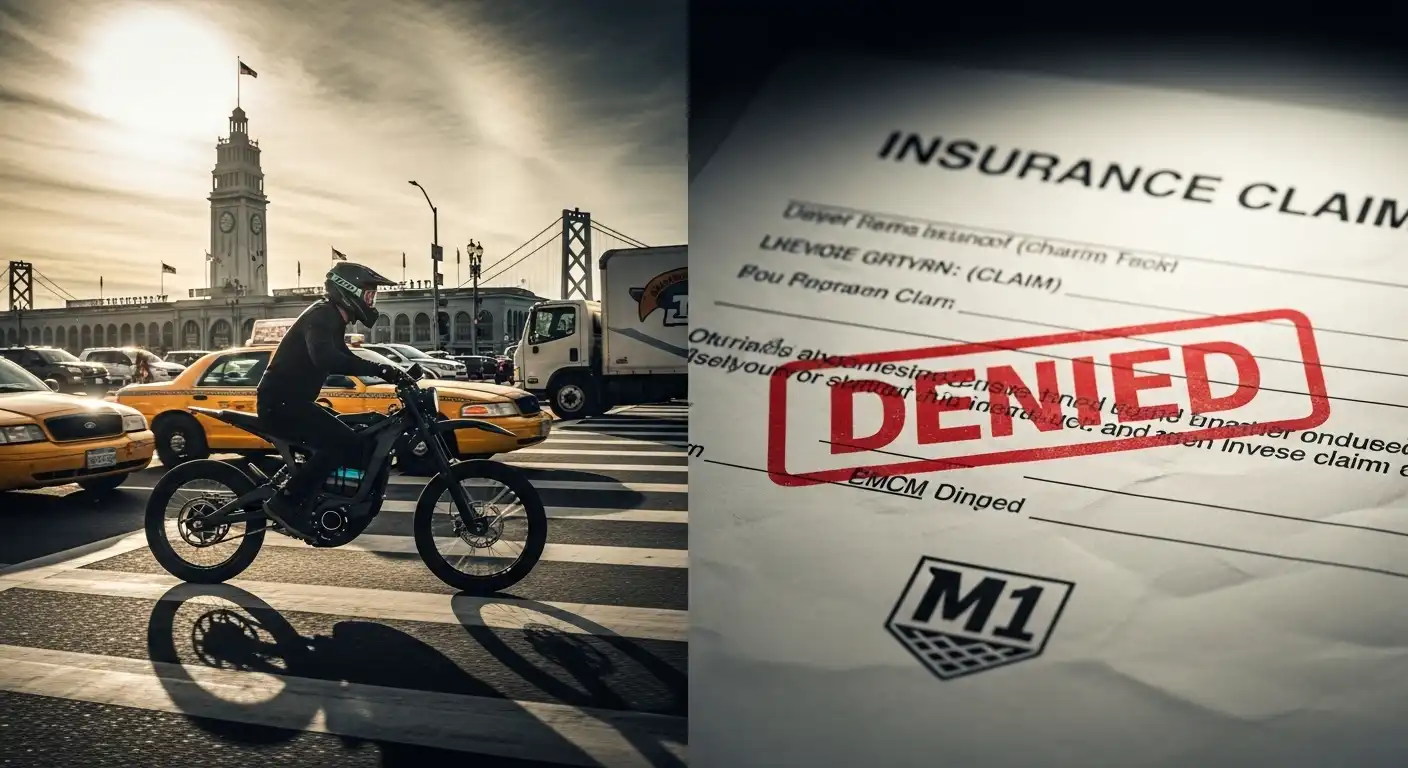
In April 2026, San Francisco’s streets reached a boiling point. District Attorney Brooke Jenkins, alongside California Attorney General Rob Bonta, issued a sweeping consumer alert that has sent shockwaves through the Bay Area’s cycling and motorcycling communities. The message was blunt: If it exceeds 28 mph, it is not an e-bike.
A new breed of vehicles, popularly known as “e-motos” (such as the Sur-Ron, Talaria, and high-spec Revv 1 models), has flooded San Francisco’s hills. While often marketed as “electric bicycles,” these machines are technically unregistered motorcycles. This distinction isn’t just a matter of semantics—it is a 2026 legal crisis. At sanfranciscomotorcycleaccidentlawyer.net, we are seeing an unprecedented surge in accident victims who are discovering, too late, that they are operating outside the law.
The 2026 Crackdown: Defining the E-Moto
For years, the “gray market” for electric two-wheelers flourished in San Francisco. Riders enjoyed the speed of a motorcycle with the freedom of a bicycle. However, the 2026 crackdown has clarified the legal boundaries. Under California law, a vehicle is only a “bicycle” if it fits into three specific classes, none of which can exceed 28 mph with motor assistance.
If your vehicle has a motor capable of propelling you faster than 28 mph, or if it lacks operable pedals and relies solely on a throttle, it is legally classified as a moped or a motorcycle. In the eyes of the SFPD, operating these without a license plate, registration, and a motorcycle endorsement is no different than riding a Harley-Davidson on the sidewalk.
The Insurance Nightmare: Why “E-Bike” Claims are Being Denied
 The most devastating consequence of the E-Moto crisis is the total collapse of insurance coverage for riders. Many San Franciscans assume their homeowners or renters insurance will cover an e-bike accident. While that may be true for a standard Class 1 Trek or Specialized bike, it is categorically false for an e-moto.
Insurance companies are using the 2026 reclassifications to deny claims involving vehicles like the Sur-Ron. Their logic is simple: the vehicle is a motorized vehicle not intended for use on public roads as a bicycle. If you are involved in a collision on the Embarcadero, you could be facing hundreds of thousands of dollars in medical bills and property damage with zero coverage. This mirrors the liability shifts we have seen in other sectors, such as the 2026 Uber “Apparent Agency” rulings, where the legal definition of the “operator” determines who pays.
Criminal Liability and San Francisco’s “Parental Responsibility” Push
In a startling 2026 development, San Francisco and Marin County prosecutors have begun filing criminal charges against parents who provide high-speed e-motos to minors. Because these bikes can reach speeds of 40–50 mph, giving one to a 14-year-old is now being prosecuted as “endangering a child.”
Just as we hold general contractors liable for site safety, the law now holds e-moto owners liable for who they allow to “pilot” these machines. If a minor on an e-moto causes an injury, the parents are not just civilly liable; they are facing potential jail time and permanent criminal records.
The “Hidden” Retailer Liability: Suing the Sellers
If you were sold a vehicle that was marketed as a “Street Legal E-Bike” but was actually an unregulated motorcycle, you may have a claim against the retailer. In 2026, California’s consumer protection laws are being used to target shops that bypass DMV safety standards. These businesses often sell “off-road only” bikes while knowing full well they will be used on San Francisco streets.
Our firm is currently investigating “Marketing Fraud” cases where retailers failed to disclose that an M1 license and DOT helmet were required for operation. This is a critical path for recovery when insurance companies walk away from a claim.
Legal Alert: A standard bicycle helmet provides zero protection at 40 mph. In 2026, San Francisco courts are increasingly finding that wearing a bicycle helmet on an e-moto constitutes “comparative negligence,” drastically reducing the compensation a rider can receive for head injuries.
How a San Francisco E-Moto Accident Lawyer Proves Your Case
 Proving a case in this “gray area” requires more than just a police report. It requires a deep understanding of the 2026 evidentiary standards. Our investigation team focuses on:
- Motor Controller Forensics: We extract data to see if the bike’s speed limiter was “unlocked” or modified, a common practice that voids insurance.
- Wattage Audits: Proving the motor exceeds the 750-watt limit for e-bikes to establish product liability against the manufacturer.
- Visibility and Lighting: Much like the new 2026 equipment mandates, we verify if the vehicle met the required visibility standards for its actual class.
Conclusion: The Era of “Anything Goes” is Over
San Francisco has always been a hub for innovation, but the e-moto crisis has proven that safety regulations eventually catch up to technology. Whether you were riding a traditional motorcycle or a high-powered electric hybrid, the legal distinctions of 2026 will determine your financial and physical recovery.