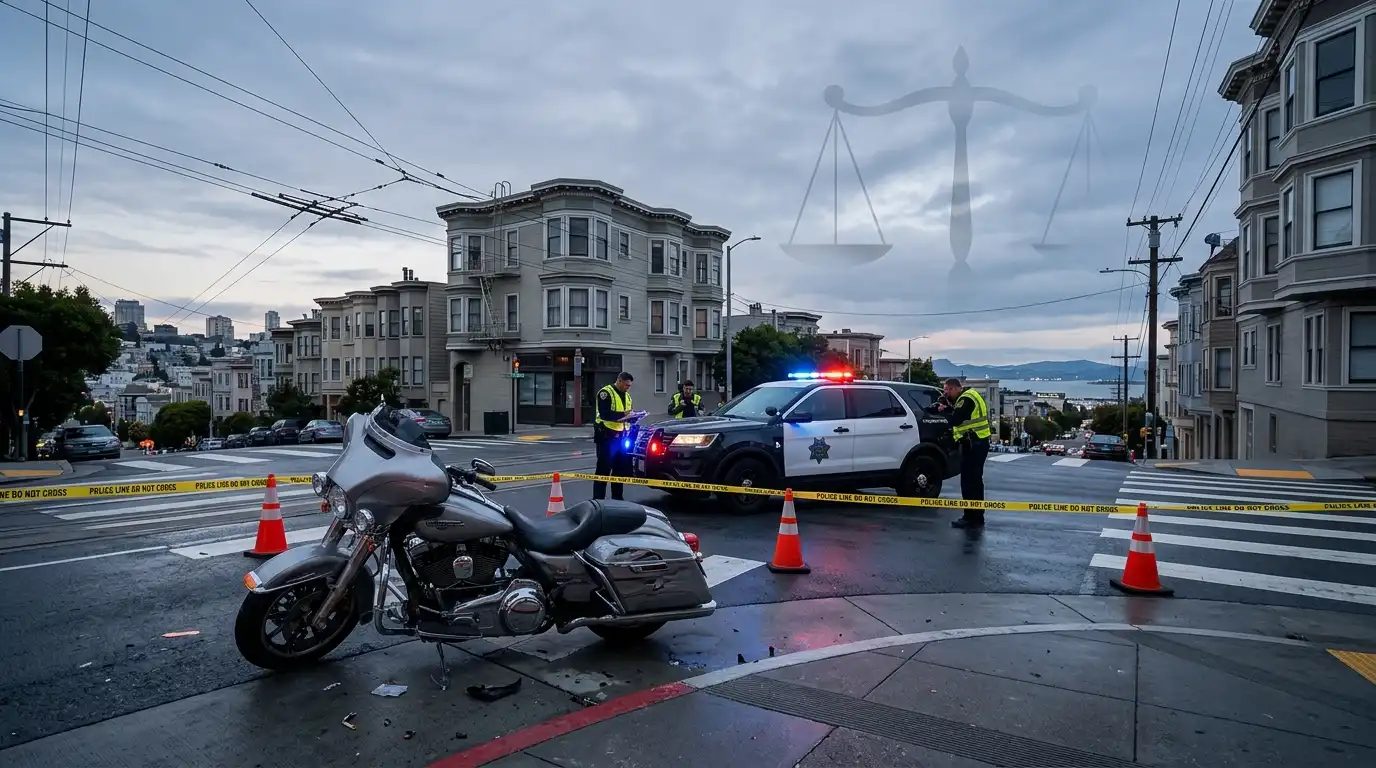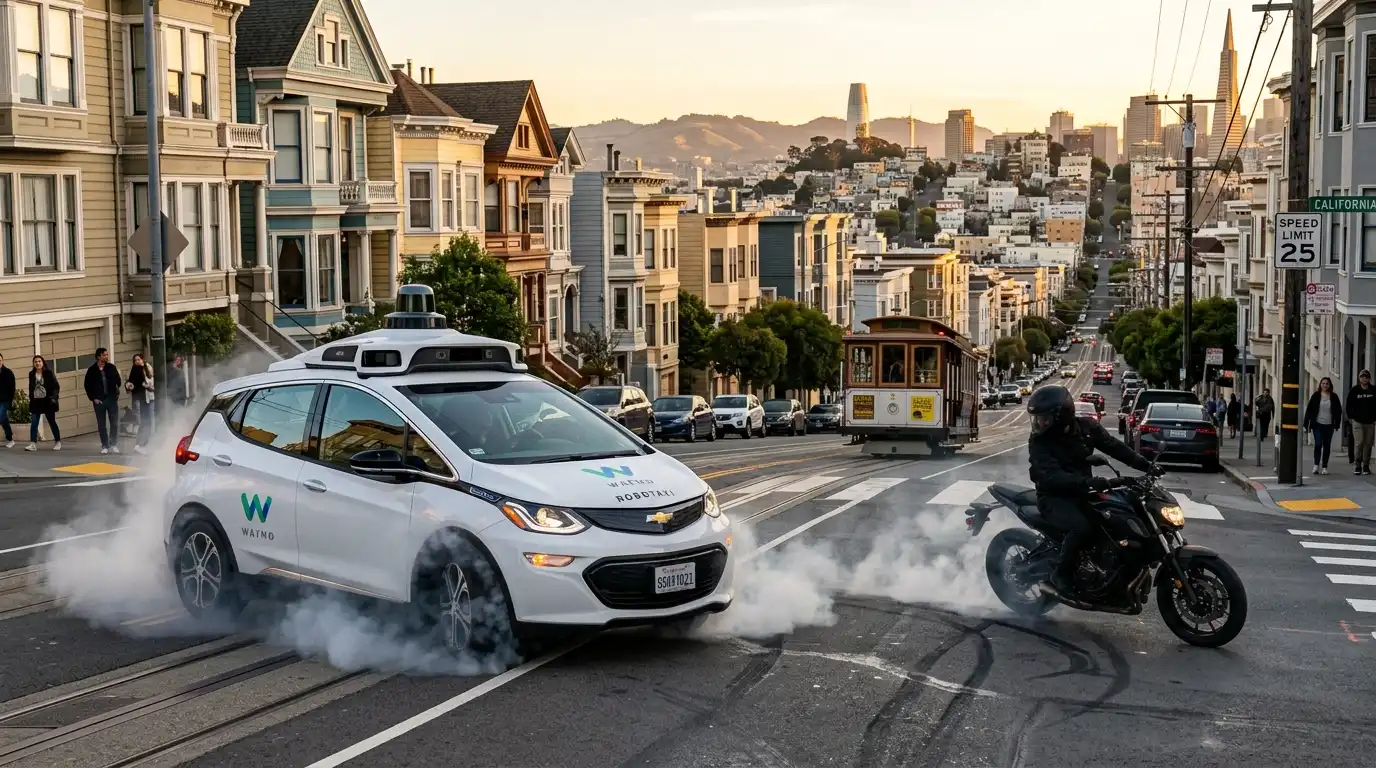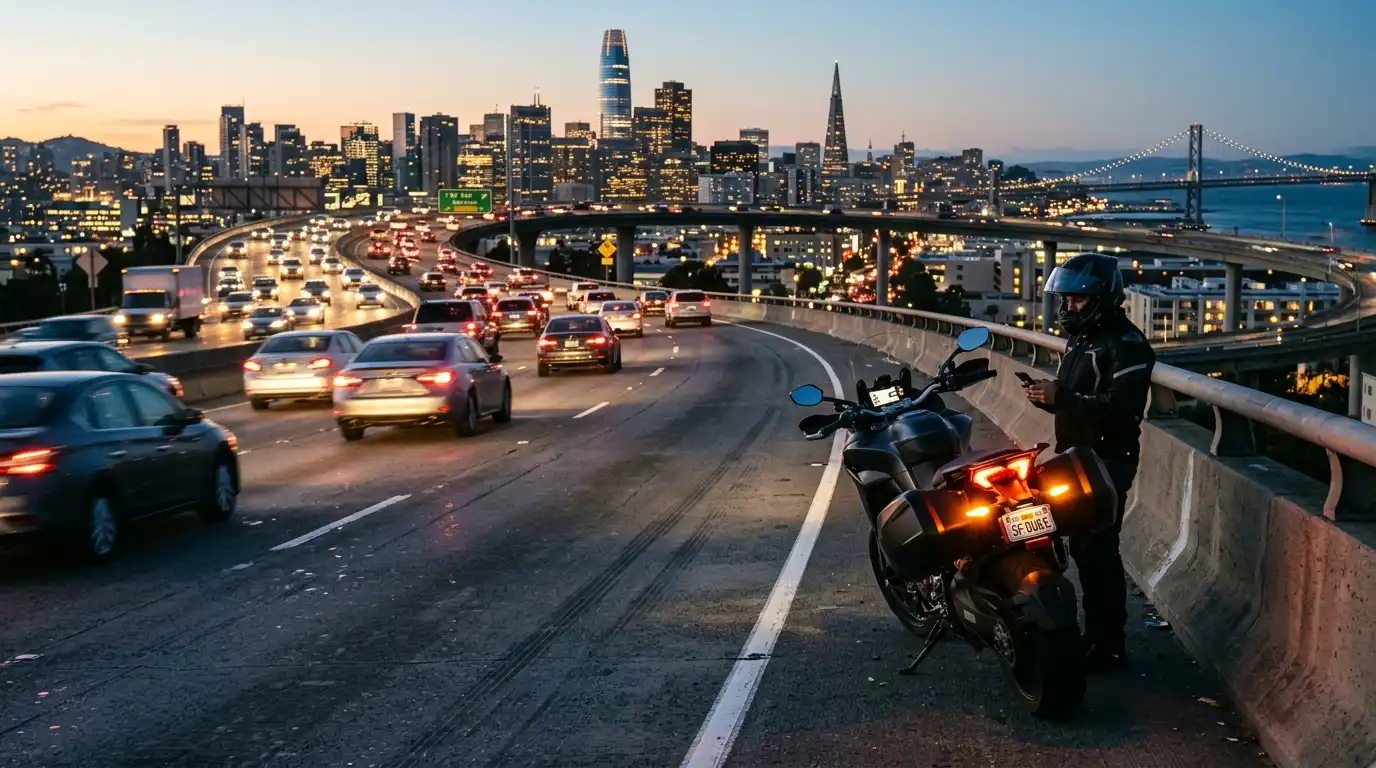
Pulling off onto the shoulder of a busy Bay Area freeway is one of the most perilous situations a motorcyclist can face. Whether you are pulled over along I-80 due to a sudden mechanical breakdown, waiting out heavy fog on Highway 17, or securing loose cargo along US-101, standing or sitting on a highway shoulder exposes you to severe risk from passing traffic. For years, California law offered explicit highway shoulder protections only to emergency responders, Caltrans maintenance workers, and tow truck operators. However, landmark state legislation—Assembly Bill 390 (AB 390)—has expanded those critical safety rules to cover every motorist stranded on the side of the road.
For Bay Area riders, this statutory shift represents a major change in both roadside safety and personal injury liability. Understanding how the expanded “Slow Down, Move Over” law applies to motorcyclists is essential for protecting your physical safety on the highway and preserving your legal rights if an inattentive driver strikes you or your bike while pulled over.
Understanding California Vehicle Code 21809 & The AB 390 Expansion
California’s original “Move Over” law, codified under California Vehicle Code (CVC) Section 21809, was created to establish a buffer zone around stopped emergency vehicles displaying flashing lights. Under the original terms, approaching drivers were required to make a lane change into an available lane not immediately adjacent to the stationary emergency vehicle or, if moving over was unsafe or impracticable, slow down to a reasonable speed.
Recognizing the rising number of fatal roadside collisions involving ordinary motorists, the California Legislature passed Assembly Bill 390 to modernize these safety protections. Under AB 390, CVC 21809 is officially expanded to protect any stationary vehicle displaying flashing hazard lights or warning devices—including turn signals, emergency flashers, road flares, or reflective warning triangles.
Key requirements of the expanded law include:
- Mandatory Lane Shift: Approaching drivers on multi-lane freeways must move over at least one lane away from any stationary motorcycle or passenger vehicle displaying hazard lights, provided it is safe to do so.
- Mandatory Speed Reduction: If heavy traffic or road conditions prevent a driver from changing lanes safely, they are legally required to slow to a reasonable and prudent speed as they pass the stopped vehicle.
- Universal Coverage: Protections are no longer limited to police cruisers, fire trucks, or Caltrans trucks; every rider or motorist stalled on the shoulder now falls under the protection of CVC 21809.
Why Shoulder Collisions Are Devastating for Bay Area Motorcyclists
Motorcyclists are inherently vulnerable because bikes lack the protective steel cages, seatbelts, and crumple zones found in passenger cars. When a motorcycle is forced off the active travel lanes and onto a highway shoulder in the San Francisco Bay Area, several localized hazards escalate the danger:
- Narrow Highway Shoulders: Urban highway corridors such as the Bay Bridge approaches, I-280 through San Mateo County, and I-880 through Oakland feature tight shoulder margins lined by concrete K-rails or steep drop-offs. These narrow zones leave virtually zero margin for error if a passing car drifts over the fog line.
- High Traffic Volumes & Distracted Driving: Bay Area commuters regularly navigate high-density traffic. A driver checking a navigation app or text message can drift across shoulder lines in a fraction of a second.
- Limited Visual Profile: A motorcycle parked on the roadside presents a significantly smaller visual profile than a SUV or commercial truck. Drivers who are not actively scanning the shoulder may fail to register a stopped motorcycle until it is too late.
“Between 2013 and 2023, California saw a dramatic 60 percent increase in fatalities involving individuals standing near disabled vehicles along public roadways. Modernizing CVC 21809 via AB 390 establishes an unambiguous legal standard designed to prevent these catastrophic roadside strikes.”
How AB 390 Impacts Legal Liability & Injury Claims
Beyond increasing safety awareness, the expansion of CVC 21809 has profound implications for personal injury litigation involving shoulder collisions. When a motorist strikes a rider who is legally stopped on the shoulder, AB 390 helps establish clear fault under California law.
1. Establishing Negligence Per Se
In personal injury lawsuits, the legal doctrine of negligence per se applies when a defendant violates a statute created to protect the public from a specific type of harm. Because AB 390 explicitly mandates that drivers move over or slow down for stationary vehicles displaying hazard lights, a driver who fails to yield and causes a shoulder crash may be presumed negligent as a matter of law. This significantly streamlines the process of proving liability against a careless driver.
2. Overcoming Unfair Allegations of Shared Fault
Insurance companies often attempt to reduce payouts by claiming a stopped motorcyclist was partially at fault for pulling over in an unsafe location or standing too close to active lanes. Under California’s pure comparative fault system, any attributed fault reduces your financial recovery. Having a clear statutory violation—such as a driver failing to move over under AB 390—provides strong evidence to defeat these defense tactics and hold the at-fault driver fully accountable.
To learn more about how fault is determined in complex traffic crashes, review official guidelines provided by the California Highway Patrol (CHP) on highway safety and accident reporting.
Essential Roadside Safety Checklist for Riders
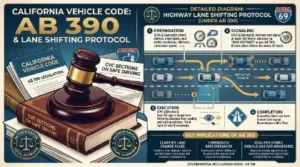 If your motorcycle experiences a breakdown or emergency while riding through San Francisco or surrounding Bay Area routes, follow these crucial safety steps to protect yourself and maximize your protection under CVC 21809:
- Pull as Far Right as Possible: Always aim for the far right shoulder or a designated turnout rather than the center median whenever possible.
- Activate Emergency Hazard Flashing Lights: CVC 21809 protections rely on visual warning devices. Immediately turn on your motorcycle’s hazard lights or turn signals to signal your presence to approaching traffic.
- Dismount Safely & Seek Guardrail Protection: Do not remain seated on a disabled motorcycle parked near active lanes. Move safely away from your bike, step behind guardrails or concrete barriers if available, and keep your helmet on until assistance arrives.
- Document the Scene & Hazard Lights: If an incident occurs, document that your hazard lights were activated prior to the collision. Taking photographs of your bike’s lights, warning equipment, and position relative to the fog line provides critical evidence for your legal team.
Consult an Experienced San Francisco Motorcycle Accident Attorney
If you or a loved one was injured while stopped on the shoulder of a Bay Area highway, navigating the legal process requires specialized representation. Insurance carriers quickly deploy investigators to minimize their financial exposure, making it essential to have an advocate who understands motorcycle dynamics and the nuances of expanded California traffic laws like AB 390.
An experienced motorcycle accident attorney will immediately secure traffic camera footage, analyze vehicle event data recorders, gather witness statements, and leverage statutory protections to fight for full compensation for medical bills, lost wages, and pain and suffering.