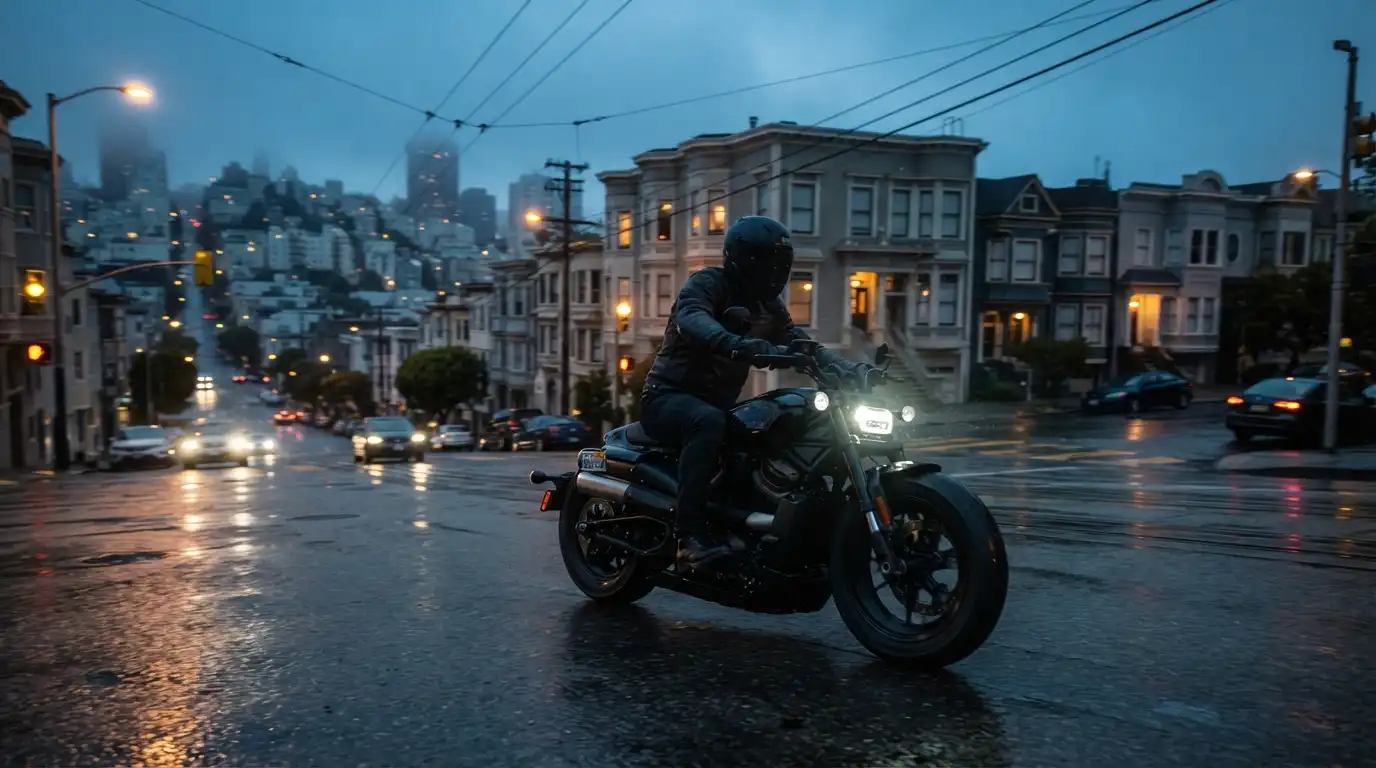
Navigating the streets of San Francisco on two wheels offers an unmatched freedom, but local riders know that the city’s historic charm comes with unique urban hazards. Among the most dangerous obstacles facing riders are the embedded metallic rails of the city’s famous transit system. A sudden slip on a polished steel track or a front wheel catching in a recessed groove can take down even the most experienced motorcyclist in a split second.
When a crash occurs due to hazardous transit infrastructure, determining legal responsibility is rarely straightforward. Understanding the specific dangers posed by steel rails, knowing your legal rights under California law, and acting quickly to preserve evidence are essential steps in securing compensation for medical bills, lost wages, and bike repairs.
Why San Francisco’s Tracks Pose a Deadly Risk to Motorcyclists
 Unlike standard asphalt roads, streetcar lines and cable car corridors present dual physical hazards to two-wheeled vehicles: extreme friction loss and structural tire traps.
- Slick Metallic Surfaces: Steel rails have a significantly lower coefficient of friction than standard pavement. When damp from morning fog or rain, metallic tracks become almost as slick as black ice, making traction nearly impossible to maintain while turning or braking.
- Groove Traps (Flangeways): The recessed gaps running parallel to the rails—designed to hold wheel flanges—are often wide enough to trap a motorcycle’s front tire. If a wheel drops into a track groove while traveling parallel to it, the abrupt steering lock instantly throws the rider off balance.
- Uneven Asphalt and Deterioration: Years of heavy transit traffic cause asphalt surrounding the rails to sink, crack, or rut. These elevation changes create sudden ridges that catch tires when transitioning across the track line.
Riders can minimize exposure by maintaining strict lane positioning and crossing tracks at an angle as close to 90 degrees as possible. However, poor road maintenance and sudden traffic flow adjustments often force riders into dangerous contact with these metal lines.
Determining Liability in a Track-Related Motorcycle Crash
Recovering damages after a track accident depends heavily on identifying what caused the loss of control. Depending on the circumstances, liability may rest with local government agencies, negligent drivers, or multiple parties under California’s comparative fault standards.
1. Municipal Liability and Government Claims
If your crash was caused by excessive pavement degradation surrounding the rails, improper track design, or failure to repair known road hazards, the city or transit authority may be held responsible under municipal road maintenance standards. In California, public entities have a legal duty to maintain public roadways in a reasonably safe condition.
However, bringing a claim against a public entity—such as the City and County of San Francisco or the San Francisco Municipal Transportation Agency (SFMTA)—requires navigating complex procedural rules. Under the California Government Claims Act, administrative claims against public agencies must typically be filed within six (6) months of the incident. Missing this strict statutory deadline usually results in a permanent forfeiture of your right to seek compensation.
2. Negligence of Other Motorists
In many instances, a motorcyclist is forced onto slick tracks or into a rail groove because another motorist committed a traffic violation. Common scenario examples include:
- A driver making an unsafe lane change without checking their blind spot, pushing a rider onto wet rails.
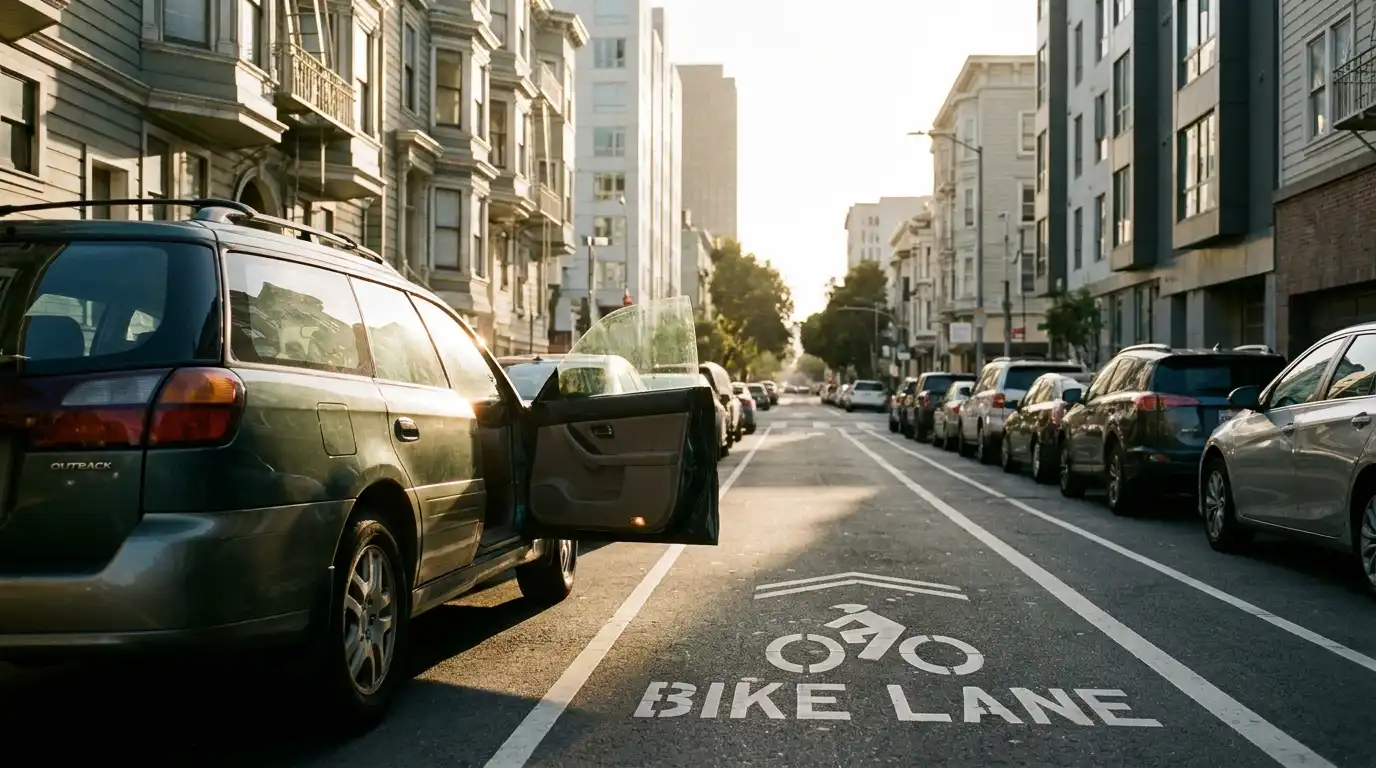
- A vehicle suddenly pulling out from a parked position, forcing the motorcyclist to execute an emergency turn across parallel tracks.
- Tailgating by another vehicle that leaves the motorcyclist insufficient room to set up a safe crossing angle over streetcar lines.
When another driver’s negligent maneuver directly causes you to lose control on transit rails, that driver can be held liable for the resulting injuries and bike damage under general negligence principles.
California’s Pure Comparative Fault Rule
Insurance companies frequently attempt to deny motorcycle claims by alleging that the rider was simply speeding, inattentive, or executed a poor riding maneuver across the tracks. Fortunately, California operates under a pure comparative fault system.
Under comparative fault guidelines, even if an investigation determines you were partially at fault for the crash, you are not automatically barred from financial recovery. Your final compensation award will simply be reduced by the percentage of fault assigned to you. For example, if your total damages equal $100,000 and you are found 20% responsible while road defect negligence accounts for 80%, you remain eligible to recover $80,000.
Essential Steps to Take After a Track Crash in San Francisco
Building a successful injury claim after a motorcycle crash involving cable car or streetcar infrastructure requires immediate and meticulous evidence collection:
- Document the Exact Physical Conditions: Take clear photographs and video of the track section where you fell. Focus on measuring track grooves, highlighting uneven asphalt lips bordering the rail, and capturing road surface moisture or oil buildup.
- File an Official Police Report: Ensure the responding law enforcement officer documents the physical road conditions surrounding the rails in the official crash report.
- Gather Eye-Witness Contact Info: Observers, pedestrians, or nearby shop owners can provide critical corroborating testimony regarding traffic patterns or known historical road defects at that specific intersection.
- Preserve Rider Gear and Equipment: Retain your damaged helmet, torn clothing, and scuffed riding gear. Scrapes and impact marks on your protective equipment serve as important physical evidence to reconstruct crash dynamics.
- Seek Immediate Medical Evaluation: Injury symptoms from severe road impacts often take hours or days to manifest fully. Prompt medical evaluation establishes a direct link between the track crash and your injuries.
Protecting Your Legal Rights After a Rail-Related Crash
Overcoming insurance carrier resistance or confronting public agency legal teams requires thorough preparation, technical accident reconstruction, and strong local legal representation. If you or a loved one suffered injuries in a motorcycle crash caused by dangerous cable car or streetcar tracks in San Francisco, securing experienced legal guidance ensures your rights are protected every step of the way.