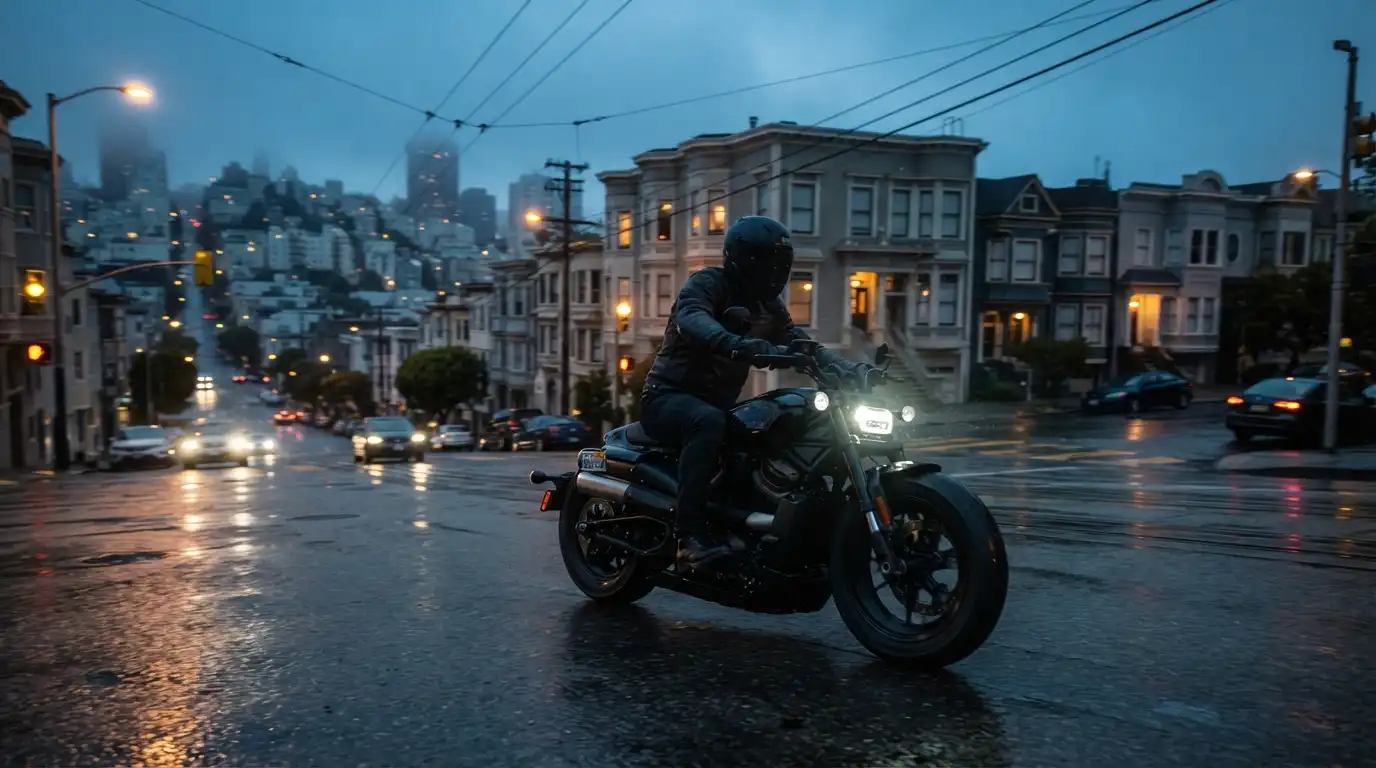
Riding a motorcycle through San Francisco offers an unmatched perspective of the Bay Area—from sweeping views of the Pacific Ocean to navigating iconic urban neighborhoods. However, splitting lanes on dense city streets and commuting across complex arterial corridors carries distinct risks. San Francisco’s unique topography, high-density traffic, and specialized transit infrastructure create hazards that demand heightened awareness from every rider.
According to data maintained under the city’s SFMTA Vision Zero Initiative, traffic violence is concentrated heavily on a small fraction of city roadways. Understanding where these high-risk zones lie and how to navigate them safely is critical for every motorcyclist in the city.
Understanding San Francisco’s High-Injury Network
 San Francisco’s High-Injury Network (HIN) represents the 12 percent of city streets where more than 68 percent of severe and fatal traffic injuries occur. For motorcyclists, who lack the protective steel shell, airbags, and crumple zones of passenger vehicles, riding through these corridors significantly elevates the risk of life-altering collisions.
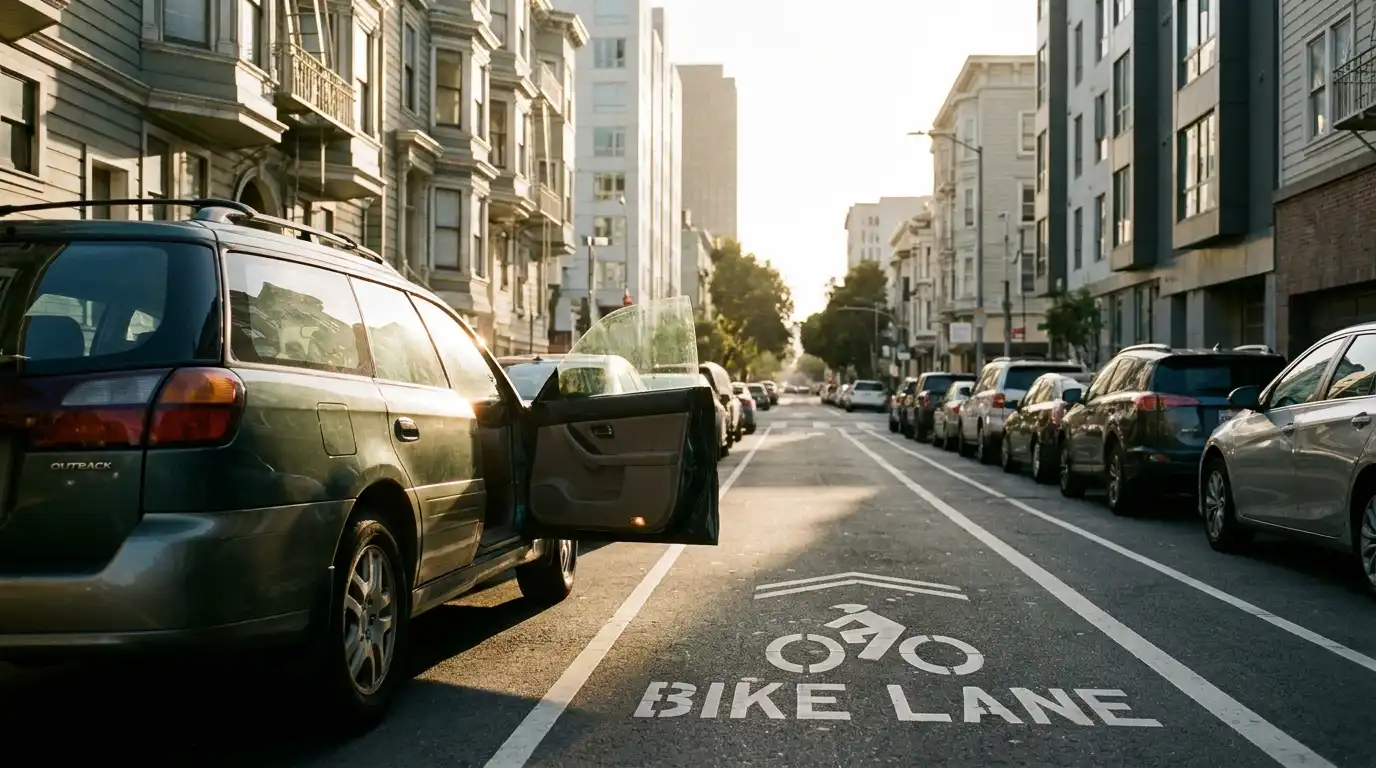
Motorcycle crashes across San Francisco rarely occur in isolation. They are frequently driven by predictable urban conflict points: sudden vehicular left turns across multi-lane streets, unexpected door openings from parallel parked cars, distracted rideshare drivers stopping abruptly, and reduced traction from streetcar tracks and coastal fog.
Top High-Risk SF Corridors & Intersections for Riders
While defensive riding is essential across all five quadrants of the city, several specific corridors require maximum tactical awareness:
1. US-101 & Division Street Undercrossing
The area surrounding Division Street, where highway off-ramps merge directly into dense surface traffic beneath the US-101 overpass, remains one of the most treacherous arterial zones in San Francisco. Vehicles exiting the freeway often maintain highway speeds while attempting rapid lane changes to access 9th Street, 10th Street, or Potrero Avenue. Motorcyclists navigating this underpass face severe blind-spot hazards, low lighting conditions, and frequent sudden stops.
2. Market Street & Mission Street Corridors
Stretching through the heart of Downtown and the SoMa neighborhood, Market Street and Mission Street present a complex maze of urban transit hazards. Designated commercial zones, frequent Muni bus maneuvers, bicycle traffic, and delivery vehicles creating double-parking obstructions force drivers into unpredictable lane switches. Furthermore, the embedded steel rail lines along transit corridors pose a constant traction threat—especially when damp.
3. Van Ness Avenue (US-101 Surface Route)
As a major north-south transit spine carrying heavy commuter traffic between the Bay Bridge and the Golden Gate Bridge, Van Ness Avenue combines high traffic volume with frequent intersections. Drivers turning left across multiple lanes of oncoming traffic often fail to gauge the speed and narrow profile of an approaching motorcycle, leading to severe broadside or “left-turn yield” collisions.
4. The I-80 / Bay Bridge Commute Bottlenecks
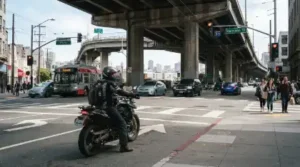 The approach to the San Francisco-Oakland Bay Bridge along the I-80 corridor experiences heavy congestion during morning and evening rush hours. While California law permits lane splitting when conducted safely, heavy traffic deceleration near exit ramps like Fifth Street and Sterling Street creates sudden lateral movements from impatient drivers jumping lanes.
SF-Specific Defensive Riding Tactics
Mitigating risk on San Francisco’s streets requires specialized riding techniques tailored to the city’s unique infrastructure and climate:
- Cross Rails at Perpendicular Angles: Cable car and streetcar tracks act like grease when wet and can trap a motorcycle’s front tire if approached at a shallow angle. Always cross tracks as close to a 90-degree angle as safely possible, maintaining steady throttle without sudden braking.
- Anticipate the Microclimate Slickness: San Francisco’s coastal fog and morning drizzle frequently coat roadways in neighborhoods like the Sunset, Richmond, and Twin Peaks. This moisture mixes with accumulated engine oil at intersections, drastically reducing braking efficiency. Increase your following distance by at least double during damp conditions.
- Guard Against “Dooring” and Rideshare Stops: Maintain a buffer zone of at least three to four feet from parallel parked vehicles along dense corridors like Valencia Street or Haight Street. Watch vehicle side mirrors for occupants and look for brake lights signaling a driver pulling over abruptly to drop off passengers.
- Position for Intersection Visibility: When stopping at major intersections along high-speed corridors, position your bike slightly off-center relative to the vehicle ahead of you. Keep your motorcycle in gear, monitor your rear-view mirrors, and maintain an escape path in case an approaching vehicle behind fails to stop in time.
Legal Protection After a San Francisco Motorcycle Collision
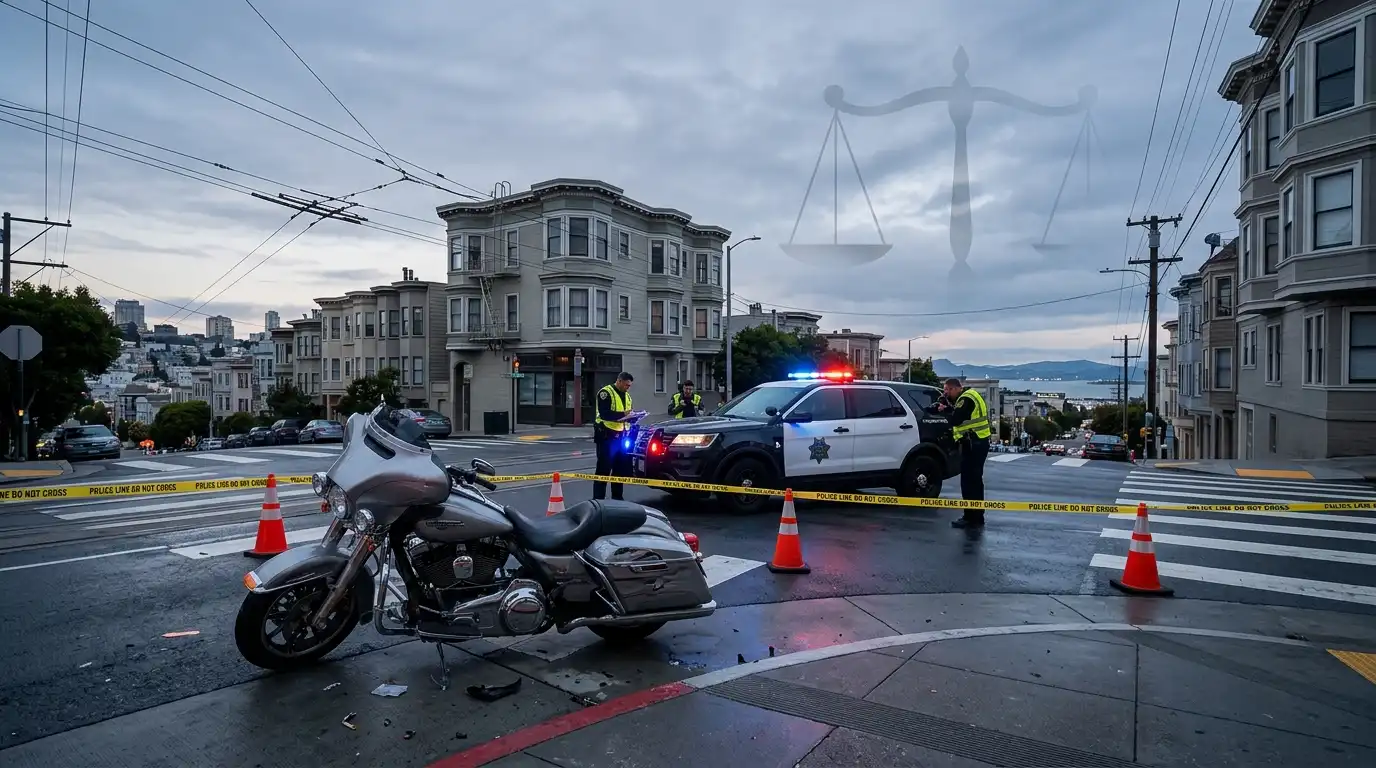
Even the most vigilant motorcyclist cannot control the negligent actions of distracted or reckless motorists. If you are involved in a collision on a San Francisco roadway, taking clear, structured steps immediately following the event helps protect both your health and your legal rights:
- Ensure Immediate Safety & Request Emergency Response: Call 911 immediately. Request emergency medical services and insist on an official police response from the San Francisco Police Department (SFPD) to document the scene and generate a collision report.
- Document the Scene Thoroughly: If physically able, capture detailed photos and video of all vehicles involved, property damage, street markings, traffic signals, skid marks, and environmental conditions. Take photos of road hazards or rail tracks if they contributed to the crash.
- Gather Witness Information: Collect names, phone numbers, and statements from bystanders, pedestrians, or fellow commuters who observed the incident.
- Preserve Gear & Evidence: Do not discard or attempt to repair damaged riding gear, your helmet, or motorcycle components. Helmet camera footage, damaged protective clothing, and physical bike damage serve as key evidence in demonstrating impact forces and liability.
- Consult a Dedicated Local Attorney: Motorcycle accident claims involve complex insurance evaluations, bias against riders, and intricate liability determinations under California comparative fault standards. Working with a law firm that understands San Francisco’s road layouts, local traffic regulations, and insurance defense tactics ensures your rights are aggressively defended.
Protect Your Ride & Your Rights
Navigating San Francisco on two wheels requires constant vigilance, tactical street awareness, and a clear understanding of where urban hazards exist. By identifying High-Injury Network corridors, adapting to localized road conditions, and practicing proactive defense, riders can enjoy the freedom of SF streets while minimizing risk.
If you or a loved one has suffered injuries in a motorcycle collision in San Francisco or across the Bay Area, do not navigate the legal recovery process alone. Contact our experienced San Francisco motorcycle accident legal team today for a free, confidential case evaluation to learn about your rights and legal options.