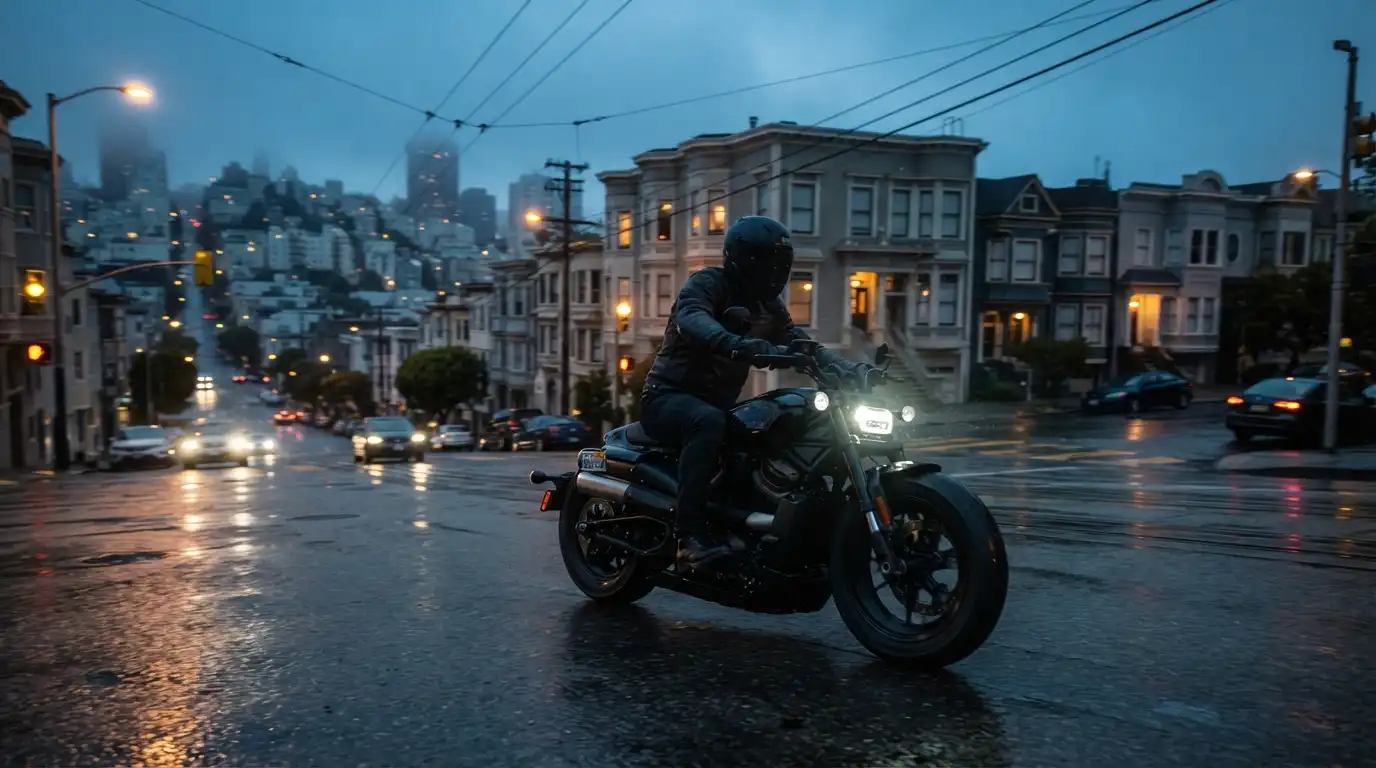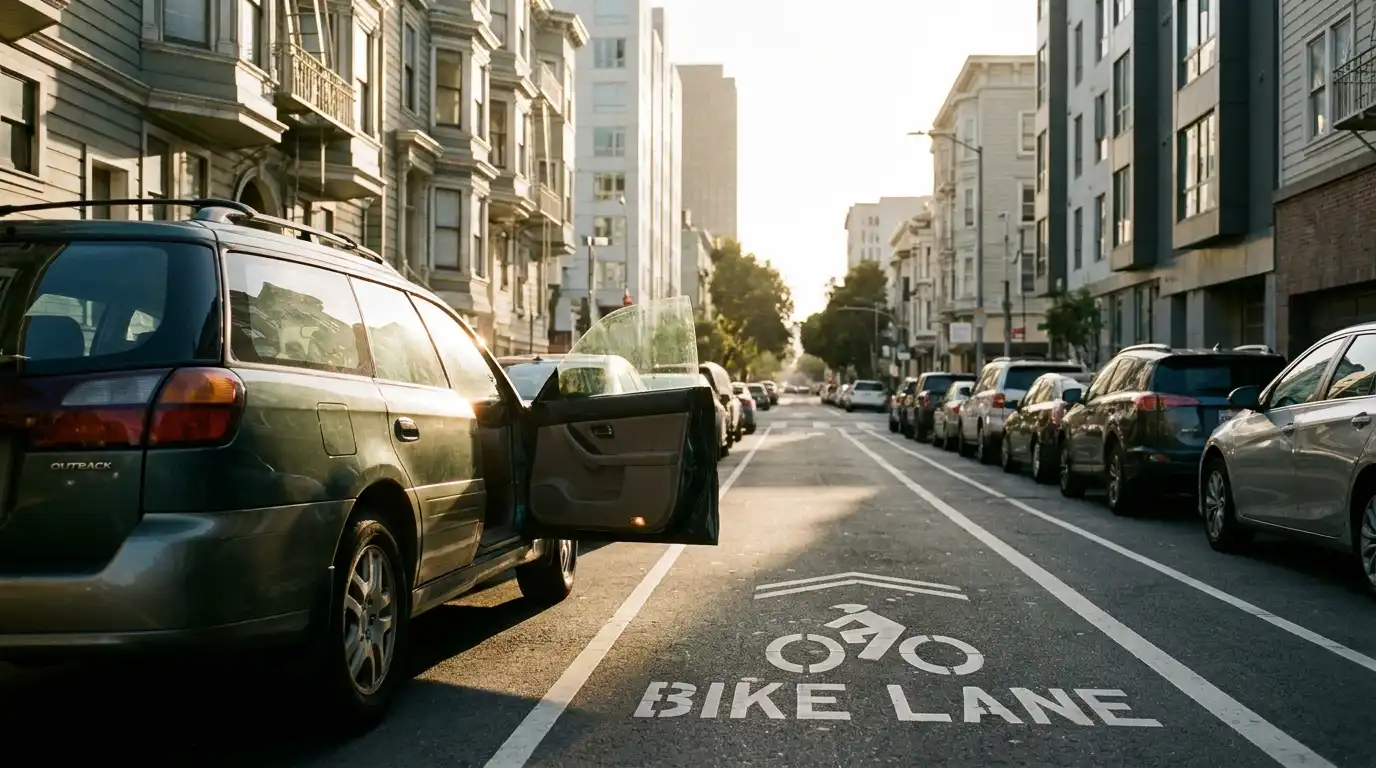
Navigating the densely packed streets of San Francisco on two wheels requires constant vigilance. Between narrow roadways, bumper-to-bumper parallel parking, and constant rideshare drop-offs along corridors like Valencia Street, Mission Street, and Geary Boulevard, riders face a pervasive urban threat: the sudden opening of a car door. Understanding san francisco motorcycle dooring accident liability and state traffic statutes is essential if you or a loved one suffers an injury in a dooring crash.
Dooring accidents occur in a split second, leaving cyclists and motorcyclists virtually no time or space to execute evasive maneuvers. Despite the common excuse from motorists that a rider “came out of nowhere,” California law places a strict duty of care on drivers and passengers before opening a vehicle door into active traffic lanes.
The Anotomy of a Dooring Accident in San Francisco
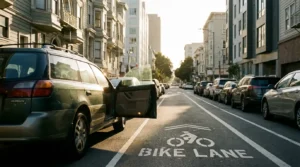
A “dooring” incident occurs when a driver or passenger in a parked or stationary motor vehicle opens their door directly into the path of an oncoming bicycle, e-bike, or motorcycle. Because two-wheeled riders often travel within the “door zone”—the two-to-three-foot space immediately adjacent to parked cars—a thrown-open door acts as an immovable wall.
In San Francisco, urban infrastructure design heightens these collision risks:
- Narrow Travel Lanes: Many historic city streets force riders to operate near line-parked vehicles to maintain distance from passing traffic.
- High Rideshare Volume: Uber, Lyft, and delivery drivers frequently pull over in active bike lanes or loading zones, leading rushed passengers to open doors blindly.
- Topography and Sightlines: Steep hills and parked delivery trucks obscure sightlines, preventing riders from seeing occupants sitting inside parked cars.
When a rider collides with an open car door, the resulting impact often causes a secondary collision, launching the rider into moving traffic or onto hard curbs. These accidents frequently result in severe, life-altering injuries, including traumatic brain injuries (TBIs), spinal cord damage, bone fractures, and severe road rash.
California Vehicle Code 22517: The legal Foundation of Liability
To prevent dooring collisions, the California State Legislature established clear statutory rules governing when and how vehicle doors may be opened into traffic lanes. Under California Vehicle Code Section 22517, the law explicitly states:
“No person shall open the door of a vehicle on the side available to moving traffic unless it is reasonably safe to do so and can be done without interfering with the movement of other traffic, nor shall any person leave a door open on the side of a vehicle available to moving traffic for a period of time longer than necessary to load or unload passengers.”
This statutory requirement establishes three distinct legal obligations for vehicle occupants:
- Duty to Yield: Occupants must verify that no oncoming traffic—including bicycles, e-scooters, and motorcycles—is approaching before opening a door.
- Prohibition of Interference: Opening a door cannot force an approaching rider to swerve dangerously or brake unsafely.
- Limited Open Duration: Doors may only remain open for the brief period necessary to enter or exit the vehicle.
When a driver or passenger opens a door into an approaching rider in violation of CVC 22517, that violation establishes a strong presumption of negligence (known legally as negligence per se) in personal injury claims.
Common Insurance Defense Tactics & Comparative Fault Myths
Despite the clarity of CVC 22517, insurance carriers routinely attempt to deny liability or shift blame onto injured riders. Adjusters often rely on common misconceptions regarding two-wheeled travel in urban settings.
Myth 1: “The Rider Was Speeding or Weaving”
Adjusters frequently claim the motorcyclist or cyclist was traveling at an excessive speed, arguing that the driver could not reasonably anticipate their approach. Rebutting this claim requires examining skid marks, vehicle telemetry, and helmet camera footage to prove the rider operated at a reasonable speed for prevailing traffic conditions.
Myth 2: “The Rider Should Have Avoided the Door”
Insurance companies may argue the rider failed to maintain a proper lookout. However, human reaction time, combined with narrow lane widths, makes avoiding a door opened within 10 to 15 feet physically impossible. Expert witness testimony from accident reconstructionists often demonstrates that evasive maneuvers were infeasible.
Myth 3: “Lane Splitting Makes the Rider At Fault”
Because motorcycle lane splitting is legal in California under CVC 21658.1, filtering past slow or stopped traffic does not excuse a driver from checking their mirrors before opening a door. A driver opening a door into moving traffic remains primary at fault for violating CVC 22517.
To review citywide traffic crash metrics and local transportation safety reports, consult the San Francisco Municipal Transportation Agency (SFMTA) Reports.
Applying Comparative Fault in Dooring Lawsuits
In cases where an insurance company argues the rider shares partial fault—for instance, alleging slightly elevated speed—California’s pure comparative negligence standard applies.
Under pure comparative fault, an injured plaintiff can still recover financial compensation even if they share a percentage of responsibility for the crash. The total monetary award is simply reduced by their assigned percentage of fault. For example, if a jury awards $100,000 in economic and non-economic damages but finds the rider 10% responsible for failing to brake sooner, the rider still recovers $90,000 from the negligent driver.
Essential Evidence to Collect After a Dooring Crash
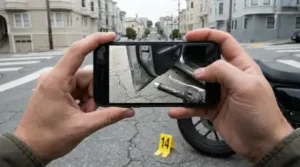
Building an undeniable dooring claim requires gathering immediate physical and digital evidence before the crash scene is altered or cleared:
- Photograph the Vehicle Door & Latch: High-resolution photos of the inside and edge of the open door demonstrate the angle of impact and prove the door was open when the collision occurred.
- Document Vehicle Position: Capture wide shots showing the car’s proximity to marked bike lanes, curb distances, and adjacent traffic lanes.
- Identify All Occupants: Determine whether the driver or a passenger opened the door. Passenger negligence may trigger coverage under different auto or personal liability policies.
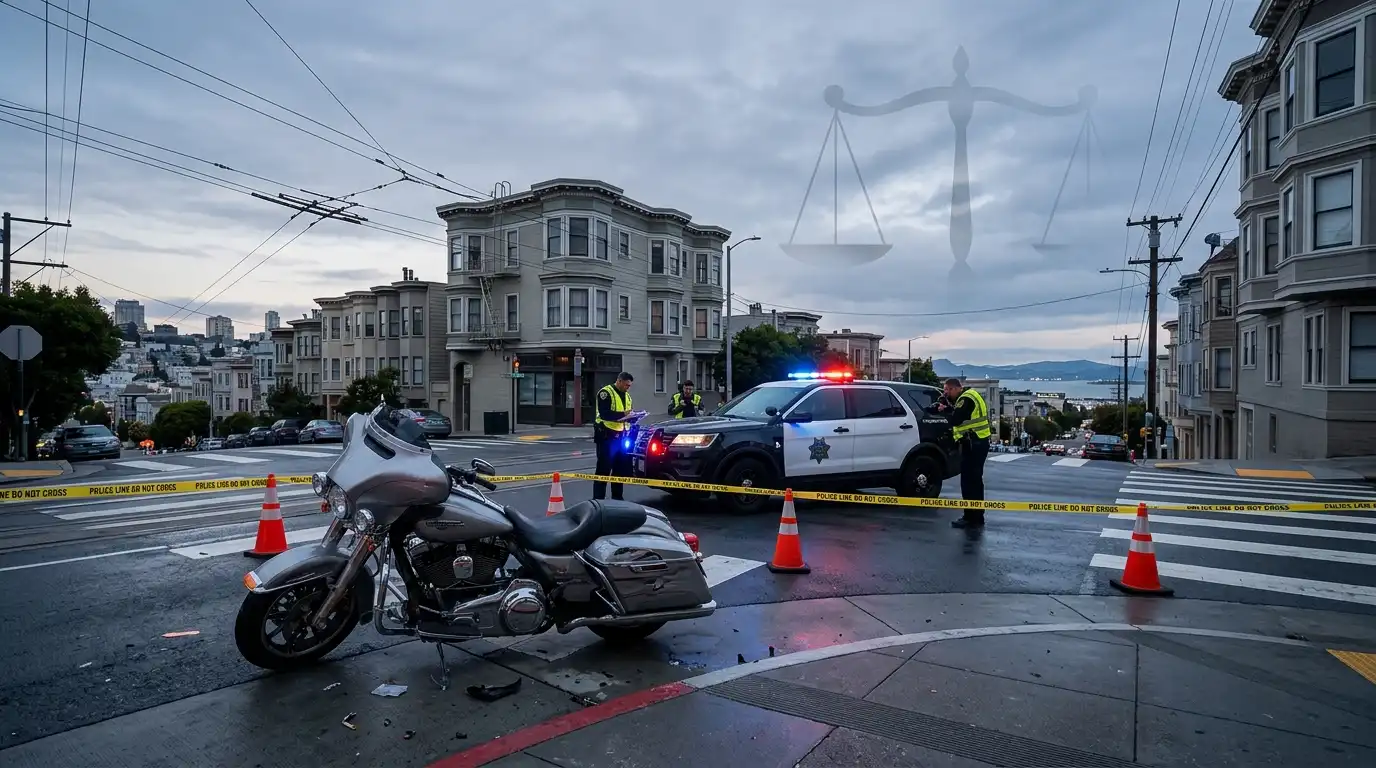
- Obtain Police Reports: Ensure the San Francisco Police Department (SFPD) or local transit police respond to document CVC 22517 violations on the official traffic collision report.
- Preserve Damaged Gear & Dashcam Footage: Retain your damaged helmet, torn riding gear, and any video footage recorded by helmet or handlebars cameras.
To examine statewide driver guidelines and urban right-of-way standards, explore the official California DMV Driver Handbook.
Steps to Take Following a San Francisco Dooring Collision
If you are involved in a dooring crash, taking prompt, structured action protects both your physical recovery and legal claims:
- Seek Immediate Emergency Medical Care: Always get evaluated by medical personnel, even if you feel able to walk away. Internal trauma and concussions often present delayed symptoms.
- Report the Collision to SFPD: Request law enforcement to the scene and insist that an official report be created.
- Avoid Discussing Fault at the Scene: Do not apologize or speculate on your speed or reaction time to the driver or insurance reps.
- Contact an Experienced Personal Injury Attorney: Consult a specialized San Francisco attorney who understands CVC 22517, local bicycle/motorcycle laws, and how to defeat insurance carrier bias.
Final Thoughts
Dooring collisions are severe, preventable accidents caused by moments of driver inattention. California Vehicle Code 22517 unequivocally places the legal burden on vehicle occupants to ensure the travel lane is clear before opening a car door. If you were injured in a dooring crash in San Francisco, understanding your legal rights empowers you to hold negligent motorists accountable and secure full compensation for your injuries and losses.